What Is Nakrutka Likes?
If you’ve spent any time researching social media growth, especially outside the English-speaking bubble, you’ve probably run into a strange-sounding phrase: nakrutka likes.
It pops up in forums.
It appears in search results.
Sometimes it’s mentioned casually, sometimes with warnings attached.
So what does nakrutka likes actually mean? Is it a tool, a trick, a scam, or just another word for buying engagement?
Let’s slow it down and explain it the way a real person would — without hype, without fear-mongering, and without pretending this topic doesn’t exist.
The Meaning of “Nakrutka Likes”
The term nakrutka likes comes from the Russian and Eastern European internet space. The word “nakrutka” roughly translates to:
- artificial boosting, winding up, or inflating numbers
- So when people say nakrutka likes, they’re talking about artificially increasing the number of likes on social media posts — usually on platforms like Instagram, TikTok, or YouTube.
In plain English:
- Nakrútka likes = non-organic likes added to a post to make it look more popular.
- That’s it. No mystery.
- But how it’s done — and why people do it — is where things get interesting.
Supercharge Your Instagram Growth
Promote your Instagram with AI-powered tools that refine your strategy, accelerate discovery, and convert views into fans
Free Instagram LikesWhere the Term Is Commonly Used
In the United States, people usually say:
“boost engagement”
“paid likes”
But nakrutka likes is still widely searched in Google USA, especially by:
- Immigrants and bilingual users
- Marketers working with Eastern European or CIS audiences
- Business owners managing international accounts
- SEO researchers analyzing global keyword patterns
That’s why the keyword nakrutka likes still matters for U.S. search — even though it didn’t originate here.
How Nakrútka Likes Usually Work
There’s no single method. In fact, nakrutka is more of an umbrella term.
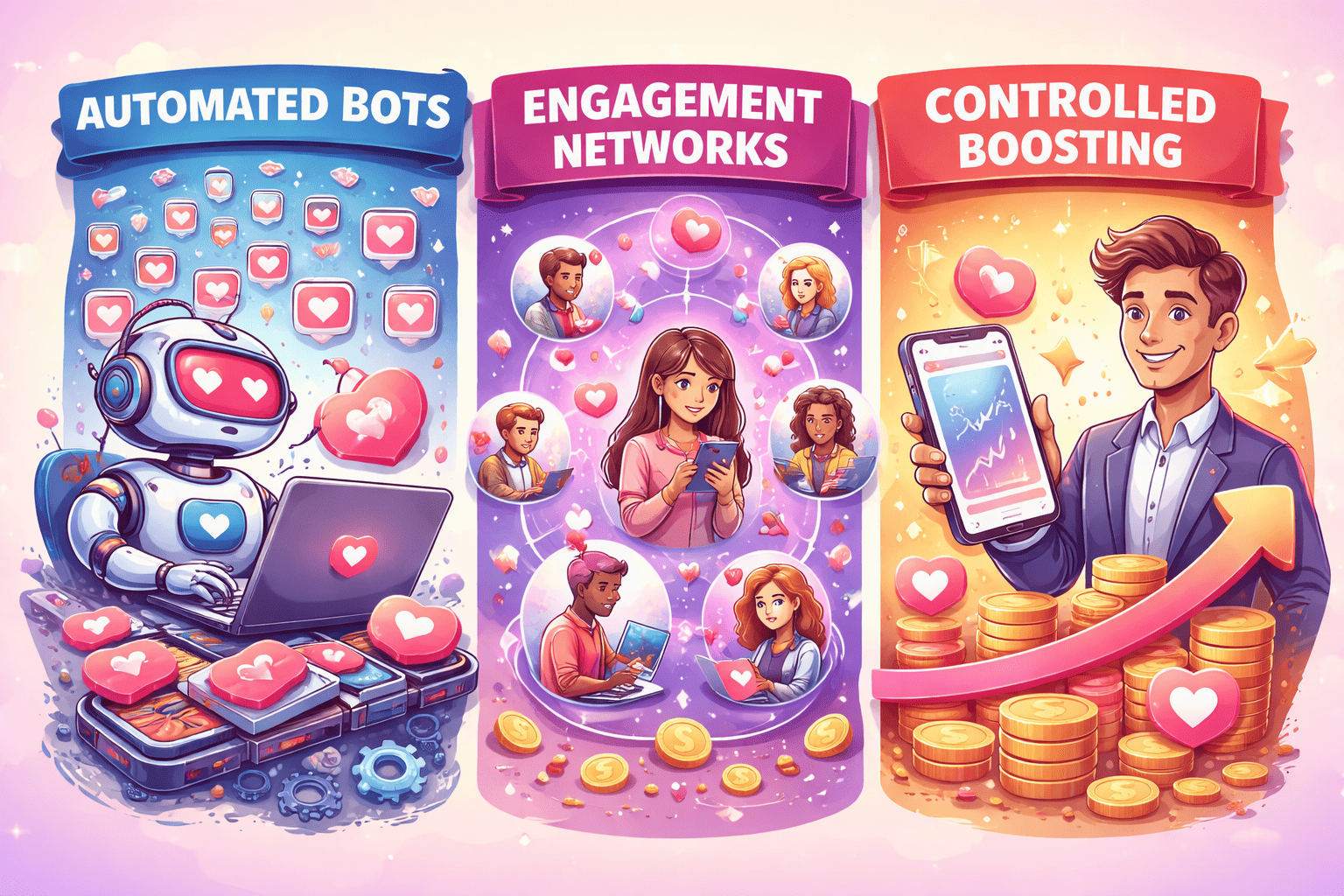
Here are the most common ways it’s done in 2025:
1. Automated Systems (Bots)
This is the old-school version.
Fake or low-quality accounts
Rapid likes delivered in seconds
Cheap, obvious, risky
These are the methods that gave nakrutka a bad reputation in the first place.
2. Engagement Networks
Real people, but incentivized.
Like-for-like schemes
Task-based platforms
Low engagement quality
Safer than bots, but still not organic.
3. Controlled Paid Engagement
This is where the modern version lives.
Gradual delivery
Mixed account quality
Human-like timing
Still nakrutka, technically — but far less aggressive and far less detectable.
Why People Use Nakrútka Likes (Even in the U.S.)
Let’s be honest.
People don’t use nakrutka likes because they’re lazy or stupid. They use it because social media is competitive, crowded, and often unfair.
Common reasons include:
- A new account with zero traction
- A post that deserves more reach
- Social proof for brands or creators
- Testing how content performs with momentum
- Avoiding the “empty post” effect
In the U.S. market especially, perception matters. A post with 3 likes and a post with 300 likes are treated very differently — by users and algorithms.
Is Nakrutka Likes the Same as Buying Likes?
Functionally? Yes.
Culturally? Not exactly.
The phrase “buy likes” sounds transactional and commercial.
“Nakrútka likes” carries a more underground, technical tone — often associated with growth tactics rather than marketing campaigns.
In practice, though, both describe non-organic engagement.
How Algorithms React to Nakrútka Likes in 2025
This is where myths start flying around.
No, platforms don’t instantly ban you for a few paid likes.
But no, they don’t ignore manipulation either.
Algorithms look at patterns, not single actions:
- Speed of likes
- Ratio of likes to views
- Account behavior of likers
- Engagement depth (comments, saves, shares)
A small, slow boost looks very different from a sudden spike of junk activity.
That’s why how nakrutka is done matters more than whether it’s done.
When Nakrútka Likes Can Backfire
Let’s not sugarcoat it.
Nakrútka likes can hurt when:
- Likes arrive too fast
- Engagement looks unnatural
- The post has no real audience
- It’s repeated aggressively
- Low-quality services are used
This is how accounts get flagged, shadow-limited, or simply ignored by the algorithm.
Bad nakrutka doesn’t just fail — it actively works against you.
When Nakrútka Likes Is Used Carefully
There’s another side to the story.
Some creators and brands use limited nakrutka likes as:
- An initial push
- A confidence signal
- A visibility test
- A supplement to real growth
- The key word here is limited.
- It’s not a growth strategy by itself.
- It’s a supporting tactic, nothing more.
Nakrútka Likes vs. Organic Growth
This is not an either/or choice.
Think of it like this:
- Organic growth builds trust and longevity
- Nakrútka likes influence first impressions
- Organic growth is slow.
- Nakrútka is fast.
Smart users don’t replace one with the other — they understand the difference and the risks.
Is Nakrútka Likes Legal in the United States?
From a legal standpoint, buying likes is not illegal in the U.S.
What is affected are platform terms of service.
That means:
- You won’t get arrested
- You might violate platform rules
- Consequences are platform-level, not legal
- This is important because many users confuse policy risk with legal risk.
- They are not the same thing.
Why “Nakrútka Likes” Still Ranks in Google USA
SEO insight here.
Google doesn’t care where a word came from.
It cares about search intent.
People in the U.S. search for nakrutka likes because:
- They saw it mentioned elsewhere
- They’re researching engagement tactics
- They want to understand the term
- They manage international accounts
That’s why well-written, explanatory content around this keyword performs surprisingly well in U.S. search results.
Common Myths About Nakrútka Likes
Let’s clear a few up.
Myth #1: Any nakrutka = instant ban
False. Patterns matter.
Myth #2: All paid likes are bots
Not true anymore.
Myth #3: Nakrútka replaces real marketing
It doesn’t.
Myth #4: It works forever
It never did.
The Real Risk Isn’t Nakrútka — It’s Misuse
Most problems don’t come from the concept itself.
They come from:
- Overuse
- Cheap providers
- Zero strategy
- Expecting miracles
- Used blindly, nakrutka hurts.
Used carefully, it simply exists — like many gray-area marketing tactics.
Final Thoughts: What Nakrútka Likes Really Is
So, what is nakrutka likes, really?
It’s not magic.
It’s not evil.
It’s not a growth hack.
It’s a tool — often misunderstood, often misused, and rarely explained honestly.
In 2025, the smartest users don’t obsess over whether something is “organic” or “artificial.” They focus on balance, intent, and long-term credibility.
And that’s the real takeaway.